
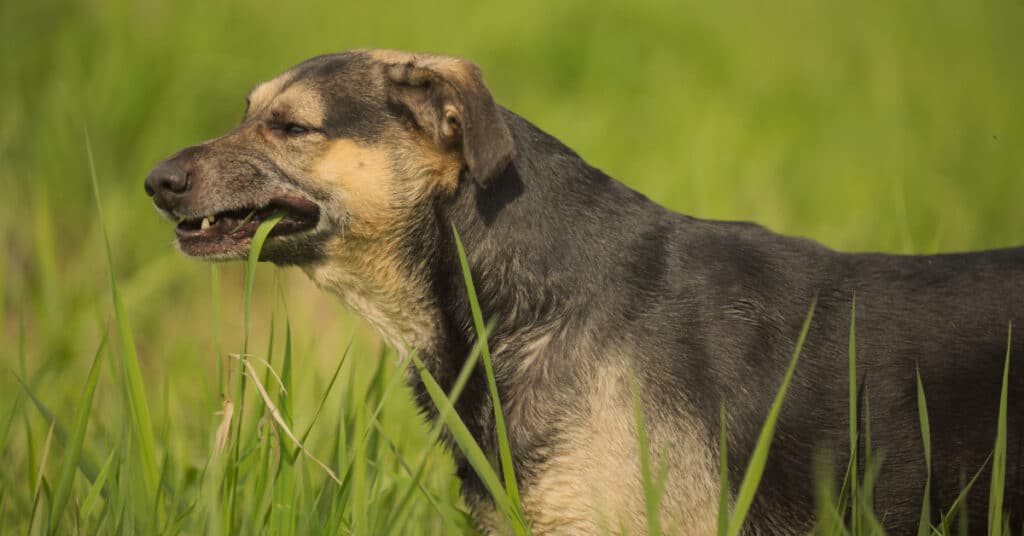
If you’ve caught your dog munching on your lawn and wondered, “Why is my dog eating grass?”, you’re not alone. It’s one of the most common behaviors dog owners ask veterinarians about, and in most cases, it’s completely normal. Dogs eat grass for a variety of reasons, from mild stomach upset to simple boredom or even because they just like the taste and texture. At Arrowhead Animal Hospital in Westminster, we get asked this question from pet parents regularly, and the honest answer is that grass-eating is rarely a sign of a serious problem.
Is It Normal for Dogs to Eat Grass?
Yes, grass eating is considered a normal behavior in dogs, and studies have shown that most dogs who eat grass don’t appear sick beforehand. So if you’re asking why is my dog eating grass and they otherwise seem happy, active, and healthy, there’s usually no cause for alarm. Dogs are natural foragers, and nibbling on plants is part of their instinctive behavior, dating back to their wild ancestors who supplemented their diets with vegetation.
Do Vets Actually Know Why Dogs Eat Grass?
Interestingly, even veterinarians don’t have one single definitive answer to why is my dog eating grass. Research on the subject is limited, and much of what we know comes from observational studies. What we do know is that grass eating is widespread enough across healthy dogs that it’s considered a normal behavioral variation rather than a red flag on its own.
Common Reasons Dogs Eat Grass
Understanding the reasons behind grass eating can help you figure out whether your dog’s habit is just a quirky preference or something worth mentioning at their next visit. Pet parents who ask, “Why is my dog eating grass?” are often surprised to learn there are several overlapping explanations.
- Upset stomach: Some dogs eat grass to induce vomiting when they’re feeling nauseous, though many dogs eat grass without ever vomiting.
- Nutritional curiosity: Grass contains fiber, and some dogs may eat it if their diet is lacking in fiber.
- Boredom or anxiety: Dogs left alone for long periods or lacking mental stimulation may turn to grass eating as a way to pass time.
- Taste and texture: Some dogs genuinely seem to enjoy the taste of fresh grass, especially in spring.
Does Breed or Age Affect Why Dogs Eat Grass?
Age and personality can play a role in why is my dog eating grass being asked more by some pet parents than others. Puppies and younger dogs tend to explore the world with their mouths and may eat grass simply out of curiosity, while older dogs who suddenly start eating grass after years of ignoring it may be signaling a change worth watching, such as a new digestive sensitivity.
Why is My Dog Eating Grass and Then Throwing Up?
While it’s true that some dogs vomit after eating grass, research suggests that only a small percentage of dogs show signs of illness before eating grass, and even fewer actually vomit afterward. If your dog occasionally eats grass and vomits once in a while, it’s generally not a concern. However, frequent vomiting alongside grass eating is worth discussing with your veterinarian, since it may point to an underlying digestive issue rather than simple grass eating on its own.
When Grass Eating Might Signal a Problem
While asking why is my dog eating grass is often answered with “it’s just normal behavior,” there are situations where it’s worth paying closer attention. These include:
- Grass eating paired with frequent vomiting or diarrhea
- A sudden increase in how often your dog seeks out grass
- Signs of lethargy, appetite loss, or weight changes
- Eating grass treated with pesticides or fertilizers, which can be toxic
How to Tell the Difference Between Normal and Concerning Grass Eating
The clearest way to answer “Why is my dog eating grass?” for your own dog is to look at the full picture rather than the behavior in isolation. A dog who eats grass occasionally, seems otherwise comfortable, and has normal energy and appetite is very different from a dog whose grass eating has become frequent, urgent, or paired with other symptoms.
How to Manage Grass Eating at Home
If your dog’s grass-eating habit doesn’t bother you, there’s usually no need to stop it, as long as the grass hasn’t been treated with chemicals. That said, some pet parents prefer to redirect the behavior.
- Offer a balanced, high-fiber diet to reduce nutritional grass-seeking
- Increase playtime and mental enrichment to address boredom-driven grazing
- Keep your dog off lawns or areas treated with fertilizer or pesticides
- Provide safe chew toys as an alternative outlet
Should I Try to Stop My Dog From Eating Grass Entirely?
Most pet parents don’t need to eliminate grass eating altogether, since it’s a normal outlet for many dogs. The goal isn’t necessarily to stop why is my dog eating grass from happening, but to manage where and how much grass your dog has access to, particularly avoiding treated lawns.
Should I Bring My Dog to Arrowhead Animal Hospital for This?
If you’ve been asking yourself, “Why is my dog eating grass?” and your dog seems otherwise healthy, a same-day visit usually isn’t necessary. But if grass eating is a new behavior, especially in an older dog, or comes with other symptoms like vomiting, lethargy, or appetite changes, our veterinary team at Arrowhead Animal Hospital is here to help rule out anything more serious.
A Behavior Worth Watching, Not Worrying Over
Grass eating is one of those dog behaviors that looks stranger than it actually is. For most dogs in Westminster and beyond, it’s simply part of being a dog: a little foraging, a little fiber, and sometimes just a craving for something green. The next time you find yourself asking, “Why is my dog eating grass?”, remember that context matters more than the behavior itself. Paying attention to frequency, triggers, and any accompanying symptoms is the best way to know whether it’s harmless curiosity or something to bring up at your dog’s next checkup with our team at Arrowhead Animal Hospital. Call (303) 469-1616 or book an appointment online!