
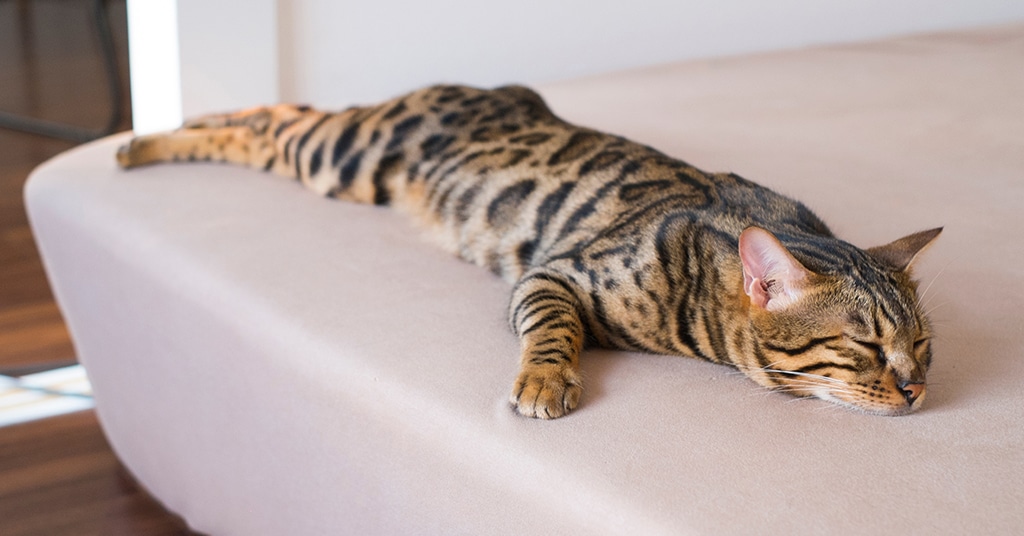
Cat lethargy is a noticeable drop in energy, alertness, or interest in normal activities that lasts longer than ordinary rest, and it often signals an underlying illness, pain, or stress. If your cat seems unusually sluggish for more than a day, or shows other symptoms alongside low energy, it’s time to contact your veterinarian.
Cats sleep a lot, which makes lethargy surprisingly easy to miss. They are also experts at hiding discomfort, a survival instinct inherited from their wild ancestors. By the time a cat looks obviously unwell, the problem behind it may have been building for days. Learning to recognize the quieter signs gives you a head start. At Arrowhead Animal Hospital in Westminster, CO, we often see cats whose owners simply sensed that “something was off.” That instinct is worth trusting. Below, we explain what lethargy looks like, eight signs that deserve attention, common causes, and how to know when your cat needs to be seen.
What Is Lethargy in Cats, and Is It Ever Normal?
Lethargy describes a state of unusual sluggishness, where a cat responds slowly, moves less, and shows little interest in things it normally enjoys. It is a symptom rather than a disease on its own.
How Lethargy Differs from Ordinary Tiredness
The average adult cat sleeps somewhere between 12 and 16 hours a day, and kittens and seniors often sleep even more. A tired cat, however, wakes up readily, stretches, comes running at the sound of the food bag, and plays when invited. A lethargic cat stays dull even when awake. It may ignore favorite toys, respond slowly to its name, or skip a meal it would normally devour. The key difference is responsiveness. Sleep is a choice your cat makes, while lethargy is a change your cat can’t easily shake off.
When Low Energy Can Be Expected
Brief periods of reduced activity can be normal in a few situations. A cat may seem quieter for a day after vaccinations, during a heat wave, or after an exciting event like a long car ride. Senior cats naturally slow down over time, too. Even so, normal sluggishness should fade within about 24 hours, and the cat should still eat, drink, and use the litter box as usual. Cat lethargy that lingers, worsens, or comes with any other change is not something to wait out.
8 Signs Your Cat May Be Lethargic
Because cats mask illness so well, lethargy often shows up as a cluster of small behavior changes rather than one dramatic symptom. Watch for these eight signs:
- Sleeping far more than usual: especially in unusual spots, such as a closet, under a bed, or away from the family
- Slow or absent response: not reacting to their name, the doorbell, or the sound of a can opening
- Loss of interest in play: ignoring wand toys, laser pointers, or games they normally love
- Reduced appetite or thirst: leaving food behind or skipping meals entirely
- Neglected grooming: a greasy, matted, or unkempt coat in a cat who is normally tidy
- Hiding or withdrawing: avoiding people or other pets they usually seek out
- Hunched or tense posture: sitting in a tucked “loaf” with half-closed eyes for long periods
- Litter box changes: straining, urinating outside the box, or producing less than usual
Why a Combination of Signs Matters
One quiet afternoon rarely means trouble. Two or three of these signs together, or any single sign lasting more than a day, points to something worth investigating. Keep a short note of what you’ve observed and when it started. Details like “stopped eating breakfast on Monday” or “hasn’t jumped on the couch in two days” give your veterinarian valuable information during the exam.
What Causes Lethargy in Cats?
The list of possible causes is long, which is exactly why a veterinary exam matters. Low energy can stem from something minor or from a serious condition that needs prompt care.
Common Medical Causes
Veterinarians frequently trace cat lethargy back to one of these underlying issues:
- Infections, including upper respiratory infections, abscesses from bite wounds, and viral diseases like FeLV or FIV
- Pain from dental disease, arthritis, or an injury your cat is hiding
- Kidney disease, one of the most common conditions in older cats
- Endocrine disorders such as diabetes or hyperthyroidism
- Urinary tract problems, including blockages that can quickly become life-threatening in male cats
- Anemia, heart disease, or certain cancers
- Exposure to toxins like lilies, certain medications, or household chemicals
How Age Shapes the Likely Causes
A cat’s life stage changes which explanations are most likely. In kittens, cat lethargy often points to infections, intestinal parasites, or low blood sugar, and young kittens can decline within hours. Adult cats more commonly develop lethargy from urinary issues, injuries, dental pain, or infections from outdoor fights. Senior cats over 10 years old face higher rates of kidney disease, hyperthyroidism, arthritis, and cancer. Owners of older cats sometimes chalk up a slowdown to normal aging when a treatable condition is actually the culprit, so any change in an older cat’s energy deserves a closer look.
Environmental and Emotional Factors
Not every cause is physical. Cats are sensitive to change, and stress can lower their energy and appetite. A move, a new baby, a new pet, construction noise, or even rearranged furniture can trigger withdrawal. Boredom and lack of stimulation can also lead to a flat, uninterested demeanor, particularly in indoor-only cats. However, stress can look identical to illness, so it’s wise to let your veterinarian rule out medical causes before assuming your cat is simply upset.
When Should You Call a Vet About a Lethargic Cat?
As a general rule, call your veterinarian if your cat’s low energy lasts longer than 24 hours or if it comes with any other symptom. Cats can decline quickly, and early care often leads to simpler treatment and a smoother recovery.
Situations That Need Emergency Care
Some situations can’t wait for a regular appointment. Seek emergency care right away if your lethargic cat is breathing with its mouth open, straining in the litter box without producing urine, collapsing, unable to stand, or showing pale, gray, or yellow gums. Suspected toxin exposure, such as chewing on a lily, also warrants immediate attention. A cat that refuses food for more than a day or two is at risk for a serious liver condition, so a missed meal or two should never be brushed aside.
Why Waiting It Out Can Backfire
Many owners hope a sluggish cat will perk up on its own, and sometimes it does. The trouble is that cats compensate for illness until they no longer can, so the visible decline often happens late. A urinary blockage, for example, can turn into an emergency within a day. Calling early doesn’t mean overreacting. Your veterinary team can help you decide over the phone whether your cat needs to come in today, tomorrow, or simply needs closer observation at home for any new signs.
Scheduling a Prompt Exam
For milder changes, like a cat that is eating but seems quieter than usual, schedule an exam within a day or two. To book a visit, call Arrowhead Animal Hospital at (303) 469-1616. If your cat shows emergency signs after hours, go directly to the nearest 24-hour emergency hospital.
How Do Veterinarians Treat Lethargic Cats?
Treatment for cat lethargy depends entirely on what’s causing it. Your veterinarian will start with a full physical exam and a detailed history, then recommend diagnostics such as blood work, a urinalysis, X-rays, or ultrasound to find the source. From there, care may include fluid therapy for dehydration, prescription medications for infection or pain, dental treatment, a management plan for chronic conditions like kidney disease or diabetes, or hospitalization for more serious illnesses. For stress-related cases, your vet can suggest changes to your cat’s environment and routine.
The sooner a lethargic cat is evaluated, the more options you’ll have. If your cat seems “off,” trust your instincts and reach out to the team at Arrowhead Animal Hospital. We’ll help you find answers and get your cat back to its curious, playful self.