The best way to handle dog teeth brushing at home is to use a dog-specific toothpaste, a soft brush sized for your pet’s mouth, and short daily sessions built around praise and patience. Most dogs learn to accept a toothbrush within a few weeks when owners move slowly and stay consistent. Daily brushing removes soft plaque before it hardens, which makes it one of the most valuable habits you can add to your dog’s routine.
Still, many owners feel unsure where to start. Which toothpaste is safe? How long should you brush? What if your dog clamps its mouth shut the moment the brush appears? The team at Arrowhead Animal Hospital in Westminster, CO, hears these questions every week. Below, we share eight practical tips that make dog teeth brushing easier for you and more comfortable for your pup, along with guidance on when a professional cleaning should join the plan.
Why Does Home Dental Care Matter for Dogs?
Your dog’s mouth changes every single day, and home care is what keeps those small changes from turning into big ones. Plaque, a sticky film of bacteria, begins forming on teeth within hours of a meal. If nobody removes it, minerals in saliva harden that film into tartar within a few days. Tartar clings to the tooth surface and creeps below the gumline, where a toothbrush can no longer reach it.
Veterinary organizations estimate that most dogs show some signs of dental disease by the time they turn three. Because dogs rarely show obvious pain, many owners don’t realize anything is wrong until the problem has progressed. Regular dog teeth brushing interrupts the plaque cycle early, before tartar has a chance to take hold.
Consistent brushing at home supports:
- Fresher breath that doesn’t clear a room when your dog yawns
- Healthier-looking gums with less redness along the tooth edges
- Longer intervals between professional cleanings for many dogs
- Early detection, since you’ll spot broken teeth, lumps, or swelling sooner
- A calmer patient during veterinary exams, because your dog is used to having its mouth handled
What Brushing Can and Can’t Accomplish
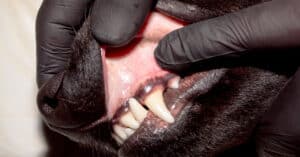
Brushing works on soft plaque. It cannot remove tartar that has already hardened, and it cannot reach infection hidden below the gums. Think of dog teeth brushing as daily maintenance that protects the results of a professional cleaning, not as a replacement for one. If your dog already has visible brown or yellow buildup, schedule a dental evaluation first so you start your home routine with a clean slate.
What Gear Do You Need to Brush a Dog’s Teeth?
The right supplies make the difference between a five-minute wrestling match and a quick, calm routine. You don’t need anything fancy, but every item should be designed with dogs in mind.
Tip 1: Use Toothpaste Made for Dogs
Never use human toothpaste on your dog. Many brands contain fluoride, which isn’t meant to be swallowed, and some contain xylitol, a sweetener that is toxic to dogs. Dog toothpaste is safe to swallow and comes in flavors like poultry, beef, and peanut butter that turn brushing into something closer to a treat. Letting your dog pick a favorite flavor can speed up the training process considerably.
Tip 2: Match the Brush to Your Dog’s Mouth
A Great Dane and a Chihuahua need very different tools. Look for soft bristles and a head small enough to reach the back molars without forcing your dog’s jaw wide open. Popular options include:
- Finger brushes: a soft rubber sleeve that fits over your fingertip, ideal for small breeds and beginners
- Dual-headed brushes: one large and one small end, handy for medium and large dogs
- Angled-handle brushes: designed to reach the back teeth with less awkward wrist movement
- Soft children’s toothbrushes: an affordable choice for toy breeds with tiny mouths
Tip 3: Look for the VOHC Seal
The Veterinary Oral Health Council (VOHC) reviews dental products and awards its seal to those that meet standards for reducing plaque or tartar. When you shop for toothpaste, chews, or water additives, the seal is a quick way to separate proven products from clever packaging. Our team is always happy to recommend specific products during your next visit.
Step-by-Step: How Do You Brush Your Dog’s Teeth?
Successful dog teeth brushing is a skill you build gradually, and the process looks a little different for every pet. These tips break the routine into manageable stages so neither of you feels overwhelmed.
Tip 4: Introduce Each Piece Separately
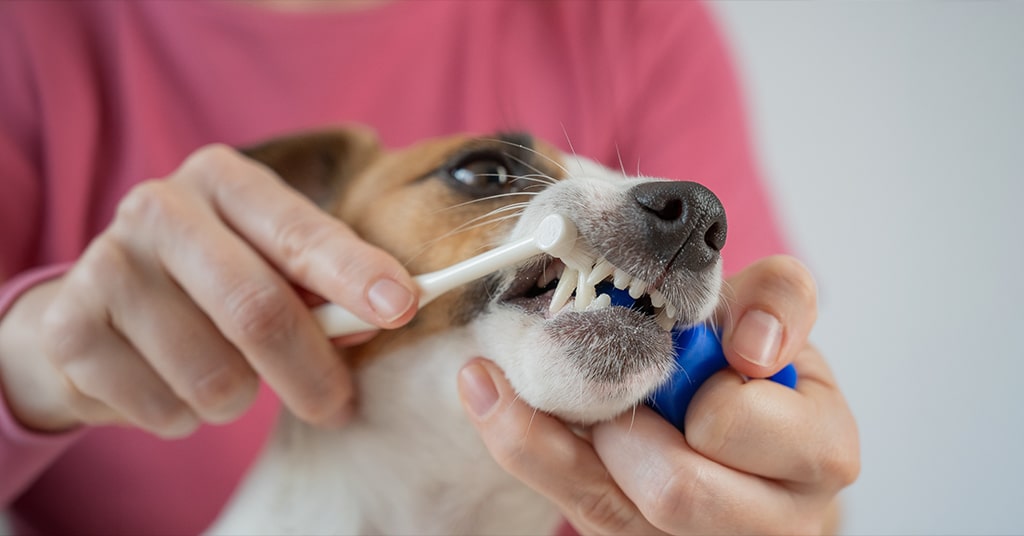
Start by letting your dog lick a small dab of toothpaste from your finger for a few days. Next, gently lift your dog’s lip and touch the outer surface of a few teeth with your fingertip. Once your dog accepts that calmly, introduce the brush with toothpaste on it and let your pup investigate before it ever touches a tooth. Moving to the next stage only after your dog relaxes at the current one builds trust instead of fear.
Tip 5: Focus on the Outer Surfaces and Gumline
When you begin real brushing, hold the bristles at a slight angle toward the gumline and use small, gentle circles. Concentrate on the outside surfaces of the teeth, especially the large upper cheek teeth and canines, where plaque tends to collect fastest. Your dog’s tongue does a reasonable job on the inner surfaces, so most dogs never need the brush on that side. Aim for about 30 seconds per side once your dog is comfortable, and keep early sessions even shorter.
Tip 6: Pick a Consistent Time Each Day
Dogs thrive on routine. Brushing at the same time every day, such as after an evening walk when your dog is relaxed and a little tired, helps the habit stick for both of you. Daily brushing gives the best results because plaque starts hardening so quickly. If daily isn’t realistic for your household, several sessions a week still offer meaningful benefits over none at all.
What If Your Dog Won’t Let You Brush Its Teeth?
Even well-behaved dogs sometimes push back against dog teeth brushing, especially in the first few weeks. Resistance usually means the routine moved a little too fast, not that your dog will never cooperate.
Tip 7: Take a Step Back and Shorten Sessions
If your dog pulls away, squirms, or turns its head, return to the last stage where it felt comfortable and stay there for a few more days. Brush only two or three teeth, then stop while things are still going well. Ending on a positive note teaches your dog that brushing is brief and predictable. Choose a quiet spot without distractions, and sit beside or behind your dog rather than looming over it, which many pets find intimidating.
Tip 8: Make Rewards Part of the Ritual
Pair every session with something your dog loves, like a favorite toy, a short play session, or a few minutes of praise and attention. Over time, many dogs start showing up for brushing on their own because they know what comes next. Patience matters more than perfection here. A dog who accepts a quick, imperfect brushing every day is far better off than one who fights a thorough brushing once a month.
When Resistance Signals Something Else
Sometimes a dog avoids the toothbrush because its mouth hurts. Stop brushing and contact your veterinarian if you notice any of the following:
- Bleeding gums or blood on the toothbrush
- Persistent bad breath that doesn’t improve with regular brushing
- Loose, cracked, or discolored teeth
- Pawing at the face, excessive drooling, or chewing on one side
- Swelling below the eye or along the jaw
- Reluctance to eat hard food or pick up toys
How Professional Dog Teeth Cleanings Complement Home Brushing
Even the most dedicated home routine can’t reach below the gumline, which is where much of dental disease actually develops. A professional cleaning performed under anesthesia allows your veterinary team to scale away hardened tartar, polish each tooth, and take dental X-rays to check the roots and jawbone for hidden problems. Anesthesia also lets the team examine every tooth thoroughly without causing your dog stress or discomfort.
Most dogs benefit from a dental exam at least once a year, with cleanings scheduled based on their individual needs, breed, and age. Small breeds and brachycephalic dogs often need more frequent attention because their teeth are crowded together.
When you pair daily dog teeth brushing with a scheduled dog teeth cleaning at Arrowhead Animal Hospital, you give your pet the strongest protection available. Our Westminster team will assess your dog’s mouth, answer your questions about home care, and help you build a dental plan that fits your pet’s life.